Uncategorised

The Home She Builds Is Rarely the Home She Owns

Nani House. Dadi House. Mom’s House. But Where Is Her House? We all grow up hearing these words with warmth and nostalgia. “Let’s go to Nani’s house.”“We’re visiting Dadi’s house.”“Mom’s house is always open for everyone.” But have we ever paused to ask a simple question? Was it ever truly their house? A woman spends her life moving between homes that are supposedly hers. First, her parents’ home. Then, her husband’s home. Later, her children’s home. Every place is named after her, associated with her love, her care, her presence. Yet somewhere deep inside, many women carry a question they rarely say aloud: “If not here, then where will I go?” Think about that for a moment. The woman who knows where every document is kept.The woman who remembers everyone’s birthdays, medicines, appointments, allergies, and preferences.The woman who plans the meals, manages the relationships, keeps peace during conflicts, cares for the sick, celebrates everyone’s achievements, and absorbs everyone’s disappointments. She is the manager, the caretaker, the emotional backbone, the invisible CEO of the household. Yet when decisions are made, she is often informed rather than consulted. Because she is not the earning member. Or perhaps she earns, but not as much. Or perhaps her labour is simply not counted because it does not arrive in the form of a salary slip. The irony is heartbreaking. The person carrying the weight of the house often has the least authority within it. And so generations of women have lived with an insecurity many men never have to experience—the fear that their place in the world is conditional. A man’s home is assumed to be his. A woman’s home is often something she must continuously earn through service, sacrifice, obedience, and adjustment. This is not a conversation about femininity. This is a conversation about patriarchy. A system so deeply woven into our lives that we mistake it for tradition. Why is caring for a man considered a woman’s duty, while caring for a woman is viewed as a favour? Why are men’s opinions expected and women’s opinions optional? Why are women trusted with responsibilities but denied authority? Why is management hers, but ownership someone else’s? And perhaps the most uncomfortable question of all: Who keeps this system alive? It would be easy to point fingers only at men. But patriarchy survives because generations have learned to protect it—sometimes knowingly, sometimes unknowingly. Women who were denied freedom may deny it to younger women. Women who were silenced may become uncomfortable when another woman speaks too loudly. Women who were judged may become judges themselves. Because pain, when left unhealed, often disguises itself as tradition. “What was forbidden for me must remain forbidden for you.” And so the cycle continues. A girl dares to dream differently. People question her character. A woman sets a boundary. People call her selfish. A wife asks for equality. People call her difficult. A mother chooses herself. People call her irresponsible. The message remains the same: Know your place. And yet, despite centuries of criticism, women continue to rise. They study, work, lead, create, nurture, build businesses, raise families, and hold communities together. Not because they are allowed to. But because they are capable. The real question is not whether women deserve a place. The real question is why we still live in a world where they are made to feel they must ask for one. Maybe true progress will begin when a woman no longer fears the question, “Where will I go?” Maybe it will begin when a daughter grows up knowing she belongs wherever she chooses to stand. Maybe it will begin when homes stop being places where women serve and start becoming places where women belong. Because a house is not defined by who pays for it. A house is defined by who builds its soul. And if love, labour, care, sacrifice, and emotional strength are the foundations of a home, then women have been homeowners for generations. It’s time society recognized it too.

The Cage

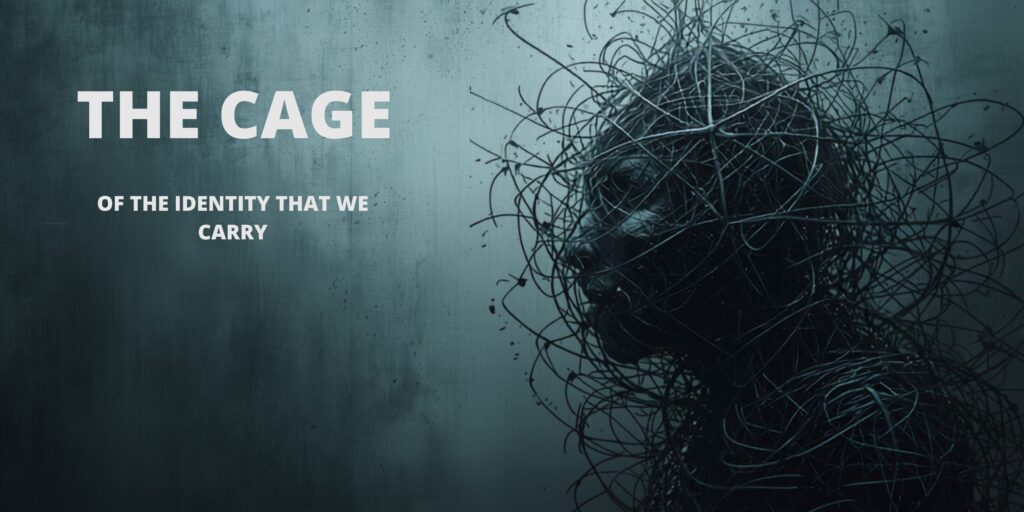
We are born with our loudest cry, and our loved ones, our family, feel so happy. It calls for a celebration… a baby is born. We receive love, care, a name, values, and beliefs that we carry for life… not knowing that maybe we have a different perspective, a different dream, different limitations, different tastes… our own likes and dislikes. We simply follow, enjoy, and do what seems normal or okay because everyone around us is doing it. Our parents are doing it, loving it. Our siblings are doing it. And without thinking, we just follow… And that becomes our habit… our comfort. But as we grow, something within us feels so done… so tired… so exhausted… so stressed. Even though we may have achieved every checkpoint on the checklist, everything seems okay to the world, maybe even to you. Yet, you have no sense of what is wrong… The problem is that, somewhere in the journey of growing up, you lost your own authenticity. Now you are carrying the beliefs, the identities, and the roles that were taught to you. You did everything to keep everyone happy, to maintain peace, to numb your own feelings, desires, and pain, to gain acceptance… to create harmony… You sacrificed your own self, your own voice, your own peace, just to keep everyone around you happy. And now, something within you is crying… That cry is not asking you to keep everyone else happy. It is a calling for you to come back to your abandoned self.The time to open the cage that you never knew existed…

INSPIRED WITHOUT MEETING

Inspired Without Meeting Many times, we don’t have to meet someone to feel inspired by them. Sometimes, the way a person is seen, spoken about, and admired by others is enough to quietly yet powerfully touch our hearts. Something similar happened to me recently. Without meeting her, without knowing her personally, without even seeing her, I felt profoundly inspired by someone—so much so that a silent desire arose within me: I want to live like that. After a long time, I met a close friend. As friends do, we spoke endlessly—about life, its changes, its chaos, its beauty, and everything in between. Somewhere in the flow of this long, comforting conversation, she unexpectedly began talking about a woman—let’s call her Miss X. Miss X was once her client and has now become a friend. As my friend spoke about her, there was a softness in her voice, a quiet reverence that couldn’t be missed. She described Miss X as deeply inspiring and incredibly beautiful—but not in ways that can be measured or explained. It was not just her energy or her aura, though those were unmistakable. It was the warmth she carried—the kind that doesn’t announce itself, yet fills the room. The kind you don’t see with your eyes, but feel somewhere deep in your chest. A warmth made up of small, unspoken nuances: the way she listens, the way she looks at people, the way her presence alone makes others feel safe, seen, and valued. This is the kind of love for which there are no perfect words.No vocabulary can fully describe it.Yet it is profound, powerful, and transformative. My friend shared how Miss X blesses everyone she meets—not as a habit, but as a genuine inner response. She celebrates people simply for existing in her life. She makes others feel special not because she tries to, but because she truly feels they are special. She celebrates love, blessings, and human connection with an authenticity that cannot be taught. She blesses everyone around her—her staff, her guards, her friends, even her friends’ staff. She holds their hands and prays for them. Quietly. Sincerely. Without any need to be seen doing it. Miss X once hosted a lavish buffet for the labourers who worked in her home, thanking them with gifts. But her gratitude went even deeper. She asked each one of them who the most special person in their life was—and then ensured that gifts were arranged for those people as well. It wasn’t generosity for display; it was love in action. She prays for everyone she knows. And when she knows someone is struggling, she prays for them silently—without informing them, without expecting acknowledgment, without seeking credit. She is someone who cherishes everyone. Someone who is not just in love with God, but feels like God’s first love—and holds God as her own first love too. By simply being who they are, such people inspire and motivate us to raise our own inner standards—to up our game, to expand our vision, and to live life more fully and more generously. They show us how to love, not by preaching about love, but by giving it unconditionally to all. They may be no one to us in a worldly sense.Yet they find a permanent home in our hearts. Without meeting them.Without seeing them.Without knowing them personally. They hold space within us forever. I don’t know exactly which chord within me this story struck. I don’t have the perfect words to describe it. But I know this—something shifted deeply inside me that day. My perspective on love changed.My way of feeling, of relating, of living softened and expanded. I now wish to celebrate people more.To love more freely.To live bigger. I wish to celebrate life the way Miss X does. And perhaps, in doing so, become a little more human… and a little more divine

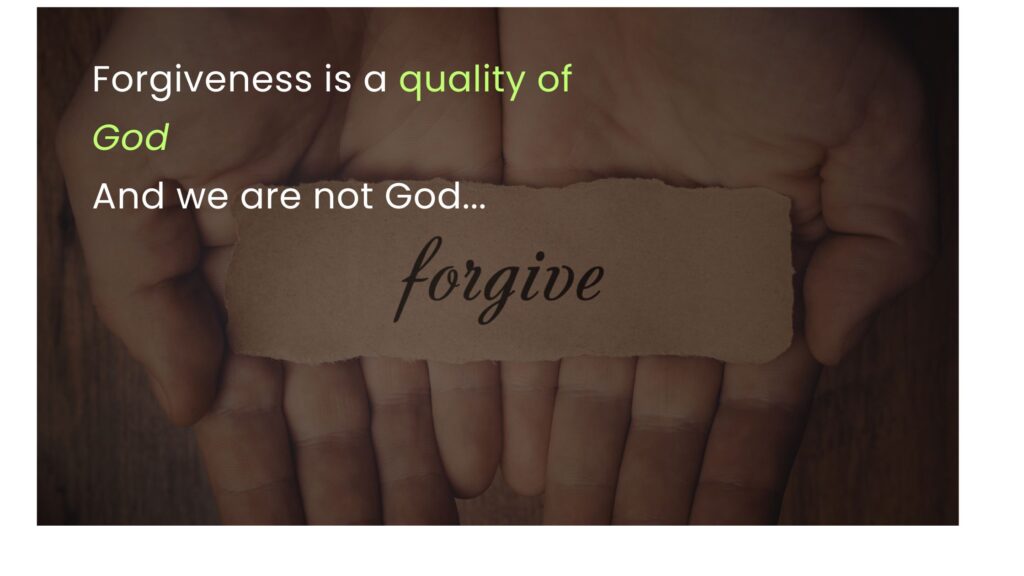
Forgiveness is a quality of God

People say “forgive” as if its soo easily. Almost carelessly. As if forgiveness is some switch you can flip once you’ve cried enough or thought about it long enough. But tell me How do you forgive someone who caused damage that can’t be undone? Damage that didn’t just hurt you but shook your entire sense of self… your identity, your confidence, your self-respect? And what about the cases no one talks about when the person who hurt you isn’t even sorry? No apology.No regret.No awareness of the mess they left behind. How exactly are you supposed to forgive then? I asked myself these questions for years.Not quietly. Not gracefully.I fought with them. I resisted them. I stayed angry because anger felt more honest than pretending to be “healed.” What I didn’t understand back then is this forgiveness has very little to do with the other person. For a long time, forgiveness felt unfair. Almost insulting. Like something expected from the wounded so everyone else could be comfortable. It’s not about excusing what they did.It’s not about saying it was okay.And it’s definitely not about pretending you weren’t affected. Some things change you forever.And acknowledging that doesn’t make you weak it makes you real. Forgiveness, as I’ve come to understand it, is a decision you make for yourself. It’s the moment you realize : I don’t want this to run my life anymore. Because when someone hurts us deeply, they don’t just hurt us once. They stay with us in our thoughts, our triggers, our reactions, our guardedness. They keep controlling our inner world long after they’ve exited our life. Forgiveness is when you gently — and sometimes angrily — take that control back. It’s when you stop waiting for an apology that may never come.When you stop hoping they’ll finally understand.When you stop tying your healing to their growth. You don’t do it because they deserve forgiveness.You do it because you deserve peace. Now here’s the uncomfortable part. Staying in victimhood can feel safer than we admit.There’s sympathy there. Validation. A sense of being seen. And when you’ve been deeply hurt, that validation matters. There’s nothing wrong with acknowledging the pain.But there’s a difference between honouring your pain and living in it. At some point, the victim story stops protecting us and starts limiting us. We sit on the victim chair not because we want to suffer, but because we’re scared of who we’ll be if we let the story go. Because healing means responsibility. It means choosing again. It means standing up. Forgiveness is that moment when you stand up. Not because you’re “over it.”But because you’re tired of being defined by it. You realise: This happened to me but it doesn’t get to decide who I become. You are not what was done to you.You are not the betrayal, the abandonment, the loss, the damage or the disrespect. You are what you choose to create after it. This is where forgiveness quietly turns into power. When you stop asking, “Why did this happen to me?”and start asking, “What is this teaching me about my strength?” Most of the time, the situations we think are against us are actually forcing us to meet parts of ourselves we never had to meet before. Our boundaries. Our resilience. Our ability to choose ourselves. Growth rarely comes wrapped in comfort.It usually arrives disguised as heartbreak. Forgiveness doesn’t mean forgetting.It means remembering without bleeding every time. Some days, forgiveness is calm.Other days, it’s messy and ongoing. Some days, it’s simply choosing not to reopen the wound. And that’s okay. Forgiveness is not weakness.It’s not submission.It’s not letting anyone “win.” It’s freedom. Freedom from carrying the past into every present moment.Freedom from letting someone else’s choices decide the quality of your life. And the truth is no one can force you into forgiveness.It comes only when you’re ready. But when it does, it’s not loud or dramatic. It’s quiet.Grounded.And deeply yours.

Scroll to Top